Gaganendranath Tagore

Painter | India

Born in 1867

Died in 1938

« Indian painter and cartoonist of the Bengal school. »

Gaganendranath Tagore was a pioneering figure of Indian Modernism and a key protagonist of the Bengal School, though his artistic journey eventually ventured far beyond its traditionalist boundaries. As the nephew of Rabindranath Tagore and the brother of Abanindranath Tagore, he was central to the cultural resurgence in Calcutta. Unlike his contemporaries who focused primarily on a nationalist revival of ancient Indian styles, Gaganendranath is celebrated for his bold experiments with Cubism and his sharp, satirical cartoons. In the 1920s, he became the first Indian artist to engage deeply with European Cubist and Futurist structures. He utilized a unique geometric language to explore the interplay of light and shadow, often depicting mysterious, labyrinthine architectural interiors. His "Cubist" phase was not a mere imitation of the West but a spiritualized abstraction, where jagged planes and prismatic shifts evoked a sense of theatrical mystery. These works, often executed in monochrome or subtle washes, remain some of the most avant-garde contributions to early 20th-century Indian art. Beyond abstraction, Gaganendranath was a master of social commentary. His lithographs and caricatures, published in volumes like "Adbhut Lok" and "Virup Vajra," offered a biting critique of the hypocrisy of the Bengali "Bhadralok" and the colonial administration. His ability to pivot between ethereal, light-filled abstractions and grounded, humorous social observation made him a singular voice. A self-taught visionary, his legacy lies in his refusal to be confined by a single movement, bridging the gap between traditional narrative and the complexities of the modern global aesthetic.

Credentials
You would like to invest in this artist?

Contact us via email


Follow this artists

Gaganendranath Tagore

ABOUT

Indian painter and cartoonist of the Bengal school

Painter | India

Born in 1867

Died in 1938
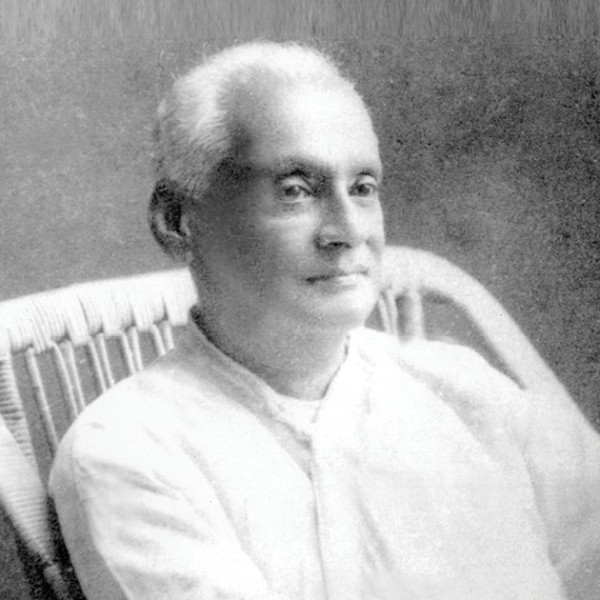
Gaganendranath Tagore
You would like to invest in this artist?

Contact us via email

Gaganendranath Tagore was a pioneering figure of Indian Modernism and a key protagonist of the Bengal School, though his artistic journey eventually ventured far beyond its traditionalist boundaries. As the nephew of Rabindranath Tagore and the brother of Abanindranath Tagore, he was central to the cultural resurgence in Calcutta. Unlike his contemporaries who focused primarily on a nationalist revival of ancient Indian styles, Gaganendranath is celebrated for his bold experiments with Cubism and his sharp, satirical cartoons. In the 1920s, he became the first Indian artist to engage deeply with European Cubist and Futurist structures. He utilized a unique geometric language to explore the interplay of light and shadow, often depicting mysterious, labyrinthine architectural interiors. His "Cubist" phase was not a mere imitation of the West but a spiritualized abstraction, where jagged planes and prismatic shifts evoked a sense of theatrical mystery. These works, often executed in monochrome or subtle washes, remain some of the most avant-garde contributions to early 20th-century Indian art. Beyond abstraction, Gaganendranath was a master of social commentary. His lithographs and caricatures, published in volumes like "Adbhut Lok" and "Virup Vajra," offered a biting critique of the hypocrisy of the Bengali "Bhadralok" and the colonial administration. His ability to pivot between ethereal, light-filled abstractions and grounded, humorous social observation made him a singular voice. A self-taught visionary, his legacy lies in his refusal to be confined by a single movement, bridging the gap between traditional narrative and the complexities of the modern global aesthetic.
Follow this artist

Credentials

Prizes
  • Played important role in the establishment of the Indian Society of Oriental Art (ISOA), Kolkata, and was responsible for many historic art promotion activities. 1907-1930
  • Played important role in the establishment of the Indian Society of Oriental Art (ISOA), Kolkata, and was responsible for many historic art promotion activities. 1907-1930
  • Established family theatre of Tagore household called Jurasanko Theatre; was more involved in costume, set design, and lighting. 1867
  • Declared Art Treasure under Antiquities & Art Treasure Act-1972. Govt. of India 1979
Solo Exhibitions
  • 22nd Exhibition of Societe des Peintres orientalistes Francais, Grand Palais, Paris. Traveling to Belgium, Holland & Imperial Institute, England.
  • Indian Society of Oriental Art (ISOA) exhibition, Kolkata & Young Men's Indian Association, Chennai.
  • Travelling Exhibition organized by American Federation of Art & Indian Society of Oriental Art (ISOA), USA.
  • Organized by James Cousins at Athenee Gallery, Geneva
  • Inaugural Exhibition, Indian Society of Oriental Art (ISOA), Kolkata.
  • Indian Society of Oriental Art (ISOA), Shimla
  • United Provinces exhibition, Indian Society of Oriental Art (ISOA), Allahabad
  • Festival of Empire, organized by Indian Society of Oriental Art (ISOA) for George V's Coronation, Crystal Palace, England.
Group Exhibitions
  • 'Ethos V: Indian Art Through the Lens of History (1900 to 1980), Indigo Blue Art, Singapore
  • 'Circle of Art: The Three Tagores', on the eve of the 150th Birth Anniversary of Rabindranath Tagore at National Gallery of Modern Art (NGMA), New Delhi
  • 'Manifestations IV', Delhi Art Gallery, New Delhi
  • 'Manifestations III', organized by Delhi Art Gallery, Mumbai & New Delhi
  • 'Manifestations II', organized by Delhi Art Gallery, Mumbai & New Delhi
  • 'Old Masters', Taj Palace International, New Delhi

Latest artworks